 Sign in
the full condition must be used, for example: "-if X<Y"

What is image carving?
Image seam carving is an algorithm for content-aware image resizing invented by Shai Avidan and Ariel Shamir (http://www.faculty.idc.ac.il/arik/). The method takes content of the resized image into account and removes least significant pixels first.
Picture Resizer 3.0 uses combination of classic image resampling and image carving to change both size and aspect ratio of a picture and preserve as much of the original as possible while filling the whole destination rectangle.
Adjusting wallpapers
The need to adjust aspect ratio of wallpapers was the main motivation for the addition of the retargeting function in Picture Resizer 3.0. While digital cameras usually have a 4:3 aspect ratio, LCD displays use another ones, like 5:4, 8:5 or 16:9. PhotoResize.exe can adjust your photos for your display. Just let it know your wishes and pray.
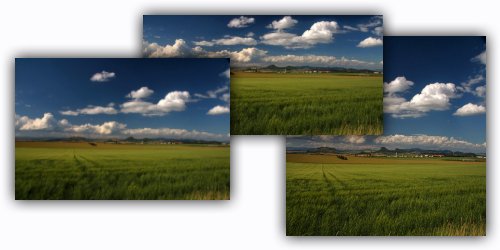
Image aspect ratio was changed. Note that the clouds appear to have been moved rather than distorted.
How to do it
Rename the application and use the G letter in the filename before the actual resolution. Then drag and drop the photo on the tool's icon and it will adjust it for you. Here are the 4 most typical settings:
- PhotoResizeG1024x768.exe - 14", 15" displays.
- PhotoResizeG1280x1024.exe - 17", 19" displays.
- PhotoResizeG1600x1200.exe - 19" and larger displays.
- PhotoResizeG1680x1050.exe - 19" and larger displays (wide screen).
If you are not sure, what resolution is your display using, look up the display properties in Control Panel. Your internet browser states that your screen resolution is: pixels.
Resources
Get Picture Resizer from the main page.
 Recent comments
Show older posts
 Anonymous
on December 5th 2011
0
Anonymous
on February 4th 2012
0
Anonymous
on May 1st 2012
0
Anonymous
on September 10th 2012
0
Anonymous
on March 28th 2014
0
Anonymous
on September 22nd 2014
0
Anonymous
on September 2nd 2022
0
Anonymous
on November 13th 2022
0
Anonymous
on March 10th 2023
0
Anonymous
on December 5th 2011
0
Anonymous
on February 4th 2012
0
Anonymous
on May 1st 2012
0
Anonymous
on September 10th 2012
0
Anonymous
on March 28th 2014
0
Anonymous
on September 22nd 2014
0
Anonymous
on September 2nd 2022
0
Anonymous
on November 13th 2022
0
Anonymous
on March 10th 2023
0
Anonymous
on December 5th 2011
0
Thanks it works now!
Anonymous
on February 4th 2012
0
Can you give a complete command line example for copying and resizing files from one certain folder to another one? Couldn´t figure it out 😞
Anonymous
on May 1st 2012
0
how do I rename the image output?
Anonymous
on September 10th 2012
0
wht a nice application software
Anonymous
on March 28th 2014
0
is it possible to copy images smaller than specified resize dimensions to the target folder with the others instead of skipping?
Anonymous
on September 22nd 2014
0
super
Anonymous
on September 2nd 2022
0
i downloaded the resize on a different computer and it is not the same size as my other computer
Anonymous
on November 13th 2022
0
BUGS: CMYK color model image conversion
Anonymous
on March 10th 2023
0
I need to resize images to 1024 x 600
how would I do this?
 reddit
 Facebook share